Progre
Role
Project Manager + product Designer
Duration
01/2021 - 03/2021
Problem Statement
When COVID-19 hit, Stanford's gym set up a reservation system to keep people safe, but it wasn't perfect. High demand for reservations with low follow-through coupled with socially isolated gym-goers resulted in frequent no-shows and frustration. Stanford's system missed the social and emotional side of fitness: Motivation, commitment, and community were at an all-time low.
To conquer this, we created Progre, a new gym-booking app that offers virtual support, encouragement, and friendly competition to keep everyone motivated, committed, and connected.
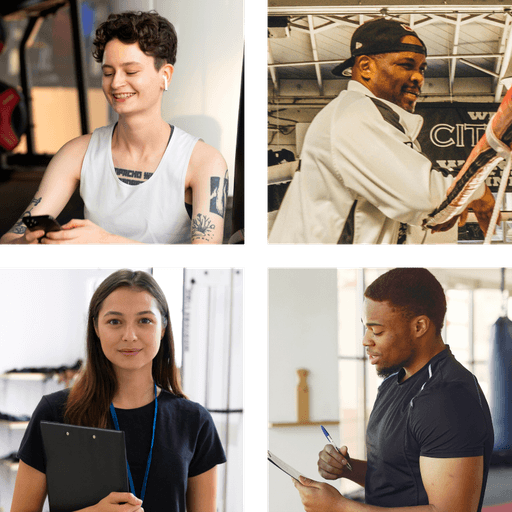
We interviewed four actor types to get a comprehensive understanding of pain points.
Before creating Progre, we talked to four groups: gym-goers, fitness instructors, gym staff, and gym administrators. We interviewed 8 people (2 from each group) and learned about how their fitness experiences changed as a result of Stanford’s new gym policies.
We uncovered the common desire of administrators, gym staff, and instructors to protect fitness habits and an uncertainty of how to do so. This uncertainty transformed the gym into a foreign and unfamiliar space that alienated gym-goers.
The core problem thus had two aspects: 1) the new unfamiliarity of the gym/fitness space and its new policies and 2) the general displacement of fitness habits.
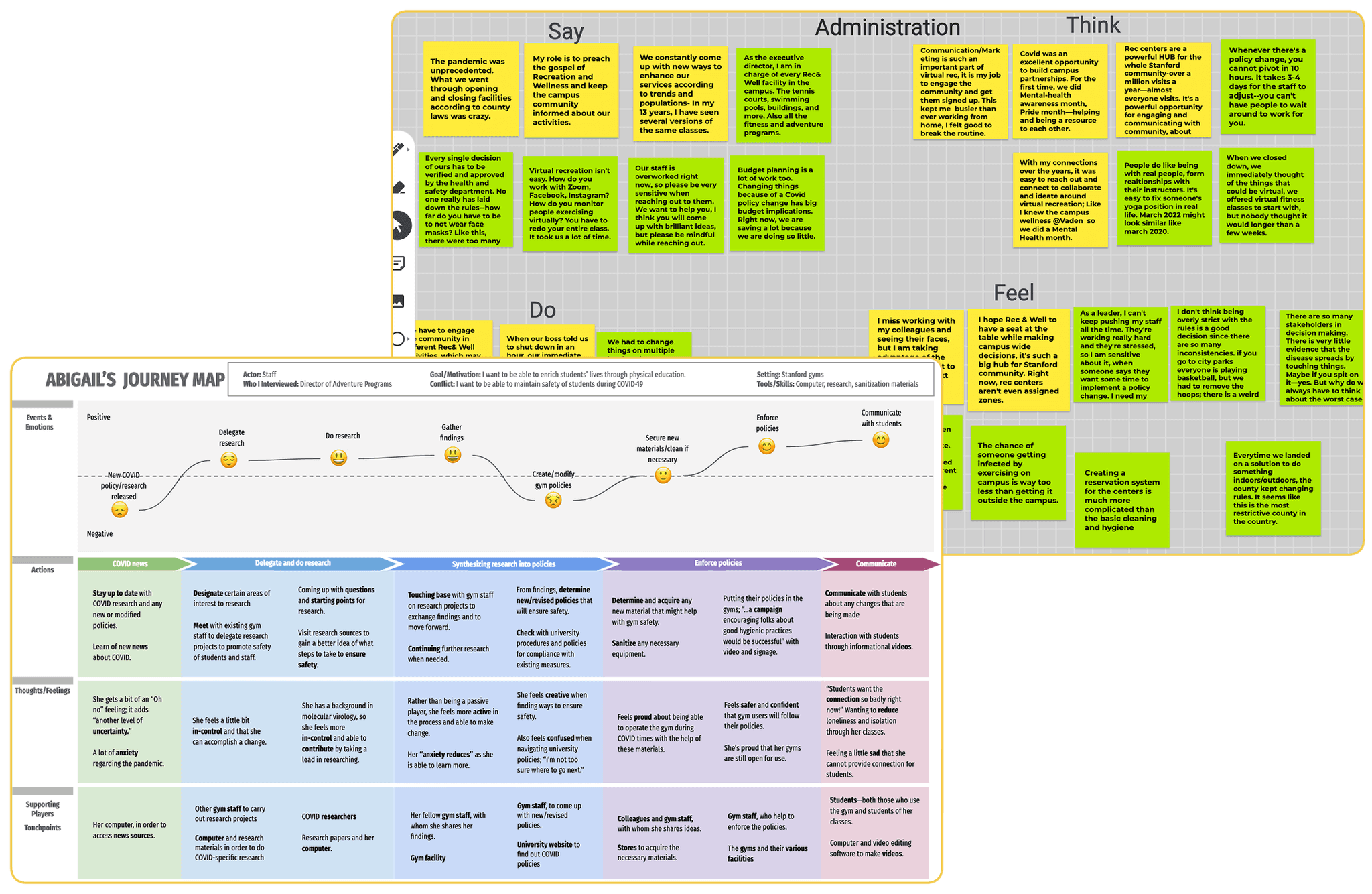
A preview of the journey maps and affinity maps we created to dissect our needfinding and synthesize insights.
Ideating
How might we help gym-goers build personal investment in their fitness growth and feel supported throughout the journey?
We used design thinking exercises to identify three possible areas to tackle the key areas identified:
appointment booking (to resolve the unfamiliarity of the new space),
communication (to keep all parties up-to-date with current policies), and
fitness within the natural world (which would forego any unfamiliarity of the gym).
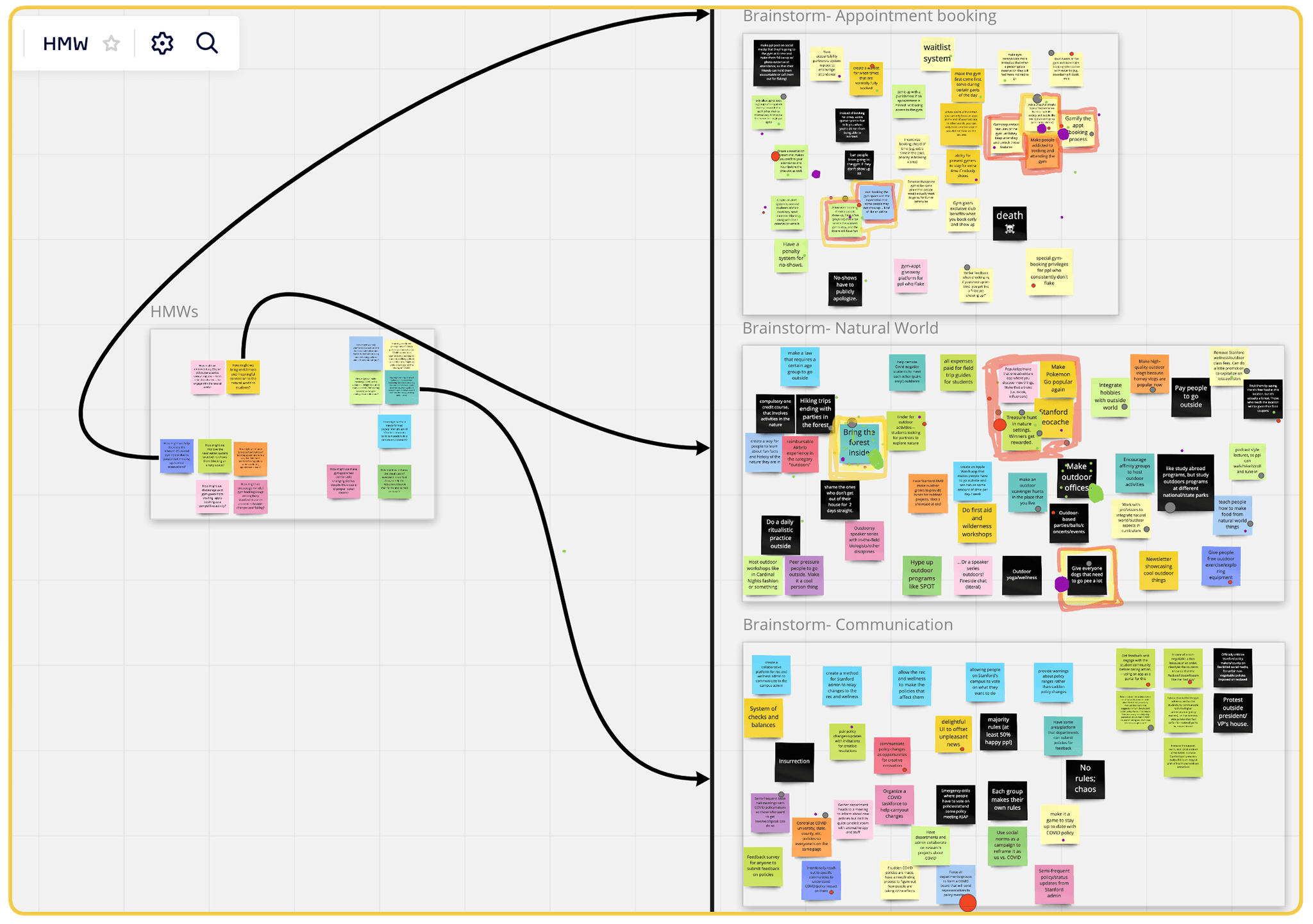
Our Miro board for brainstorming solutions to our How Might We question.

Some possible avatar evolutions that a gym-goer can achieve.
Experimenting
We then tested one idea from each category. The idea that became Progre was "gamifying appointment booking with avatars."
The core assumption of it was that by providing an avatar to add personal investment and visualize growth, people would be more committed to going to the gym.
To test the avatar premise, I planned a rapid experiment for three gym-goers where they created custom avatars that evolved when engaging in gym-related activities.
These are some key findings that shaped Progre:
1) Making avatars can be personal but doesn’t have to be. While we initially fixated on human-like representations to facilitate personal connection, we switched to non-human avatars when we learned that participants preferred pet- and creature-like avatars that they could project onto.
2) Gym-goers liked seeing their avatars grow, which motivated them to work out more. One participant viewed their avatar as a manifestation of their growth and habits during the experiment. This revealed that change should be visible and representative in order to boost personal investment.
"How is my effort going to be represented here? It felt like I could see change with my avatar."
– One participant from the rapid experiment
With the premise tested, we continued to flesh out Progre through concept sketches, a service blueprint, and a paper prototype. After 3 rounds of RITE testing, we created a high-fidelity prototype, using mood boards, a style tile, and design system to create Progre’s brand image.
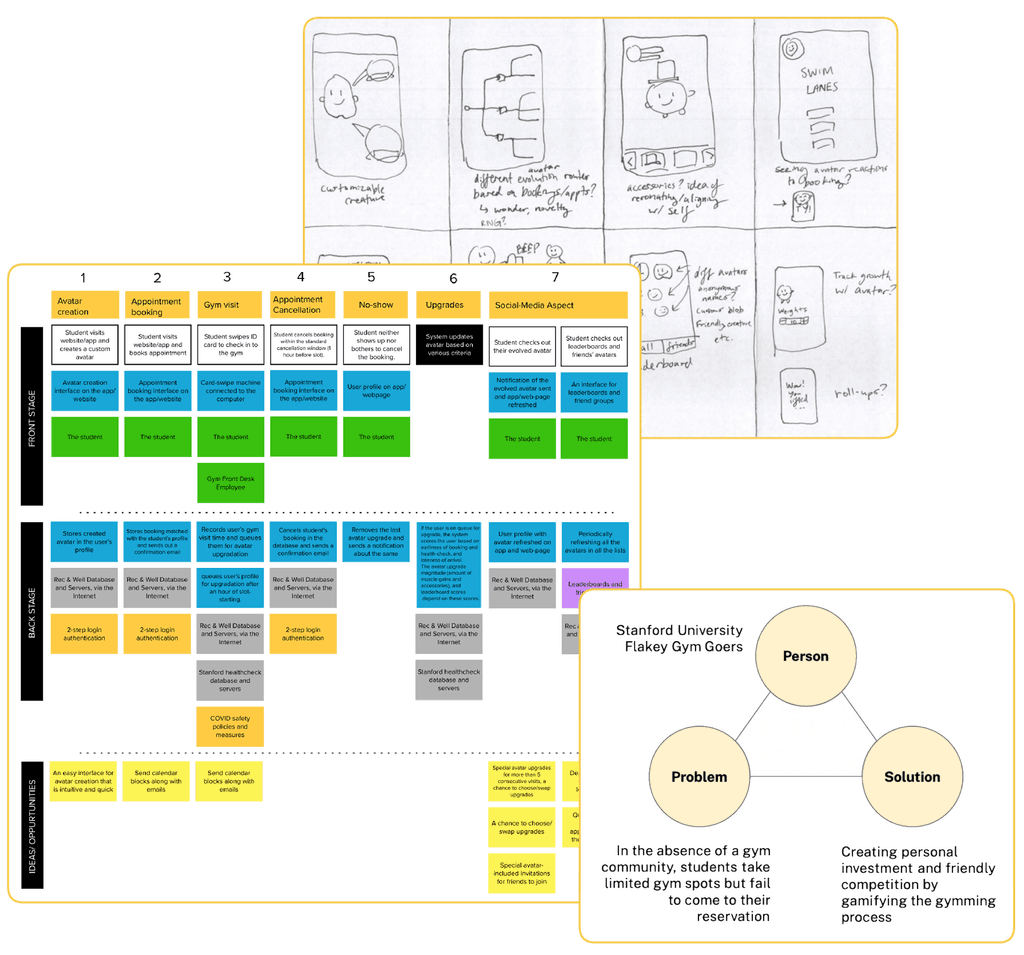
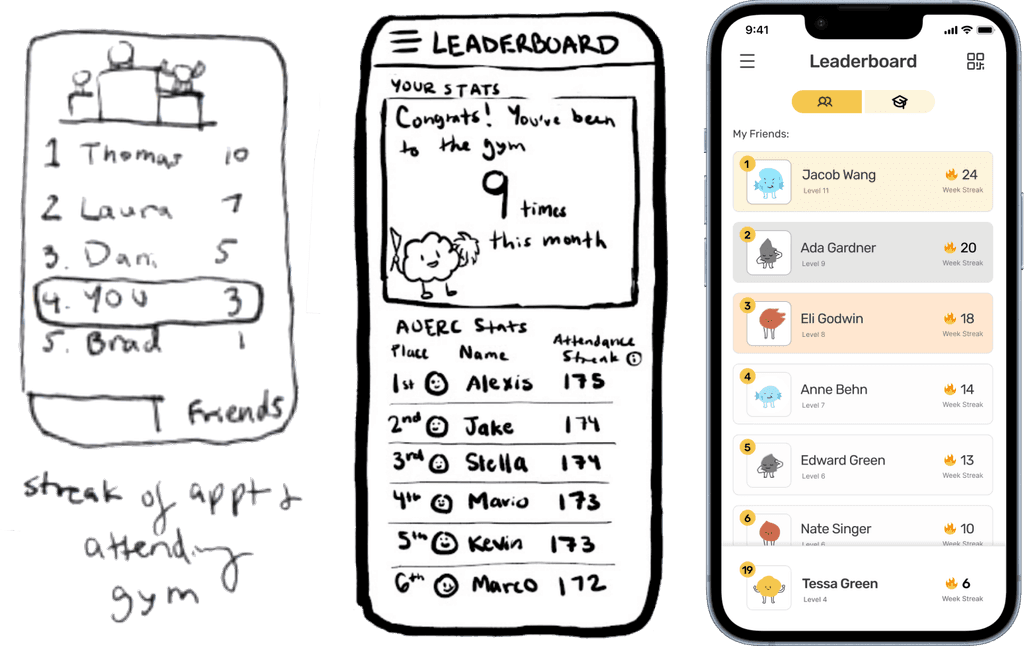
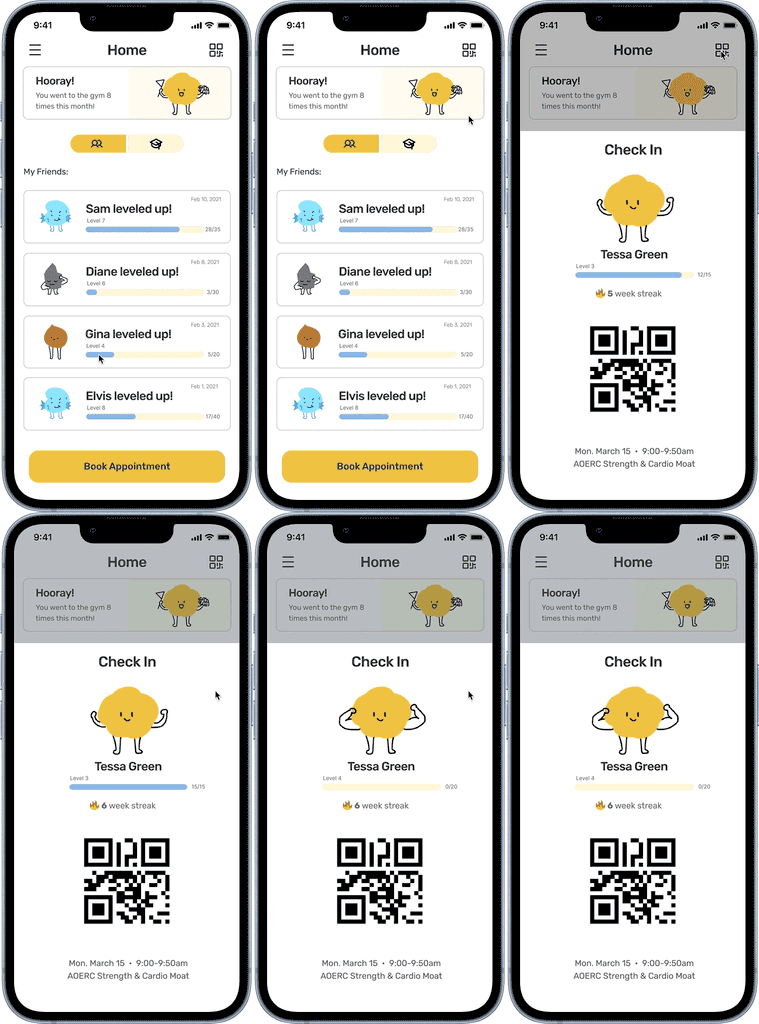
Our prototype evolution for Progre.
Outcome
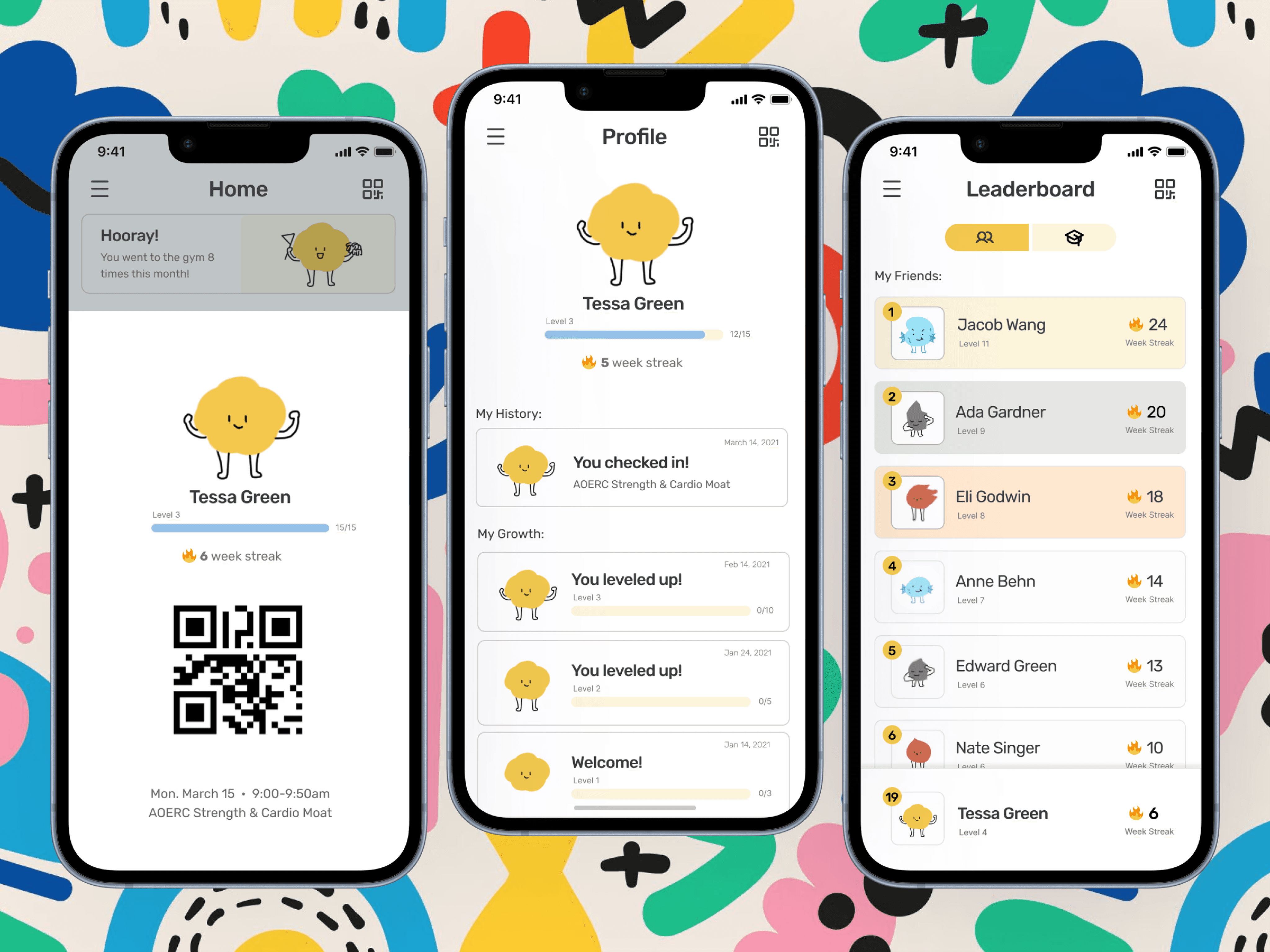
The resulting high-fidelity prototype of Progre is an all-in-one gym-booking app that offers virtual support, encouragement, and friendly competition to keep everyone motivated, committed, and connected. It’s built around avatars, a leaderboard, a QR check-in, and positive affirmation.
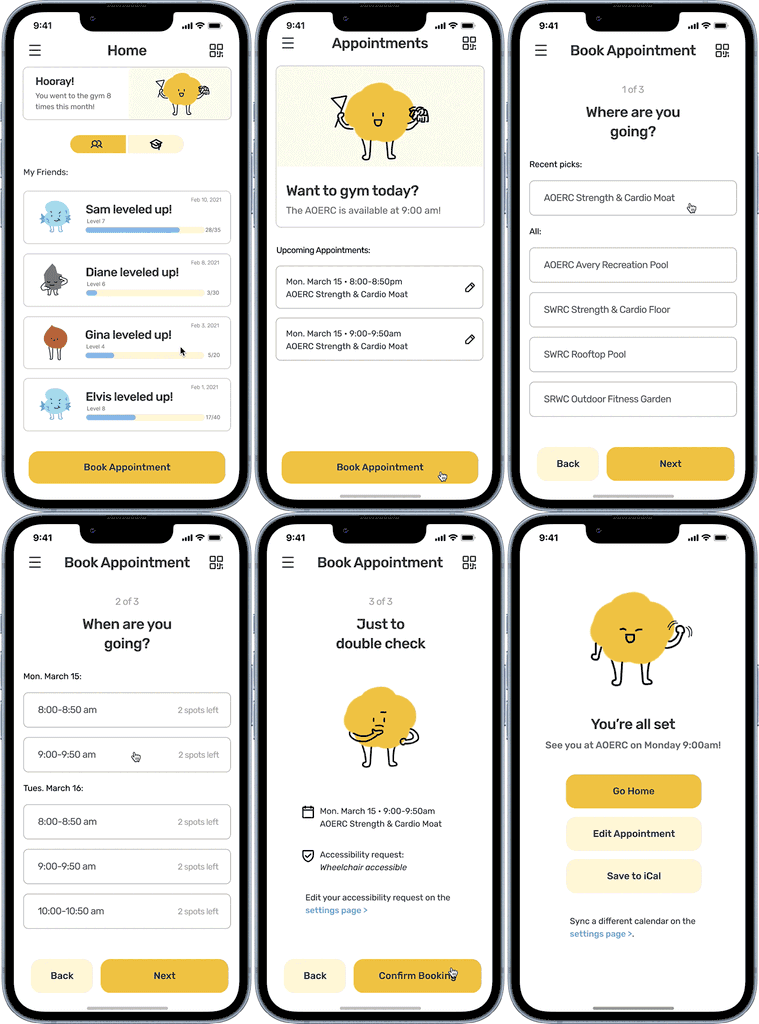
Avatars: Users get avatars that level up as they attend gym sessions, externalizing personal progress and building investment in an inclusive, gender-neutral way without focusing on body image.
Leaderboard: Progre's leaderboard offers friendly competition and community connection, resetting monthly to show gym attendance rankings among friends and the Stanford community.
QR Check-In: Users can check in with an in-app QR code, avoiding the hassle of health forms and ID cards, making gym visits stress-free and contact-free.
Positive Affirmation: Instead of punishing missed sessions, users receive rewards and encouragement for keeping gym commitments, based on the effectiveness of operant conditioning and positive reinforcement.